Vision 201: community & diversity

People often ask what we are about. Our go to answer is : Restore Church exists to foster Authentic Faith, Diverse Community, and Radical Generosity.
We sum it up: believe connect serve.

Today I want to talk about diversity and community. What should the church community look like? How is diversity expressed in different contexts?

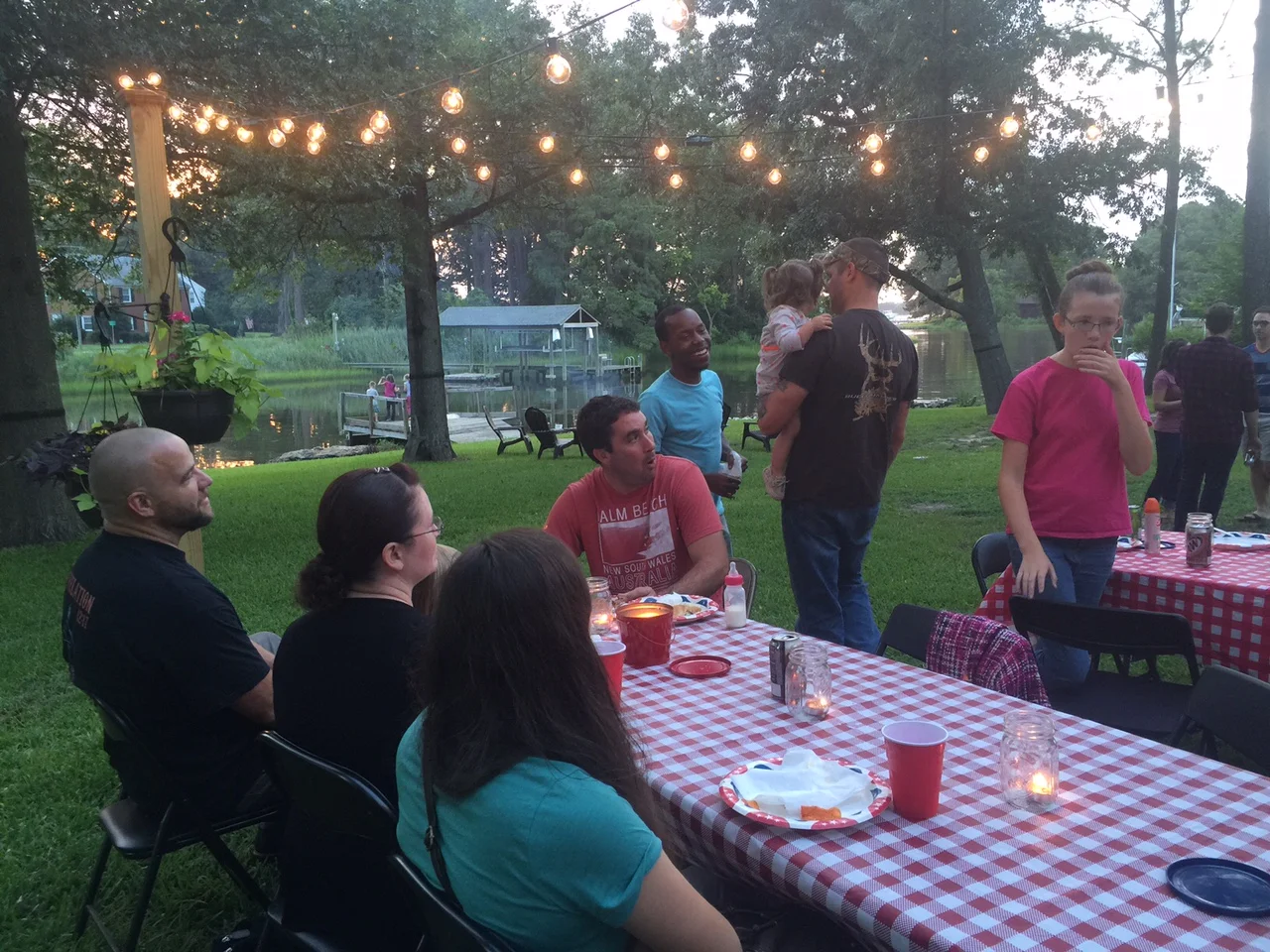
Diversity is so much more than skin deep. When we moved to Portsmouth, we knew we were moving to an area of the 757 where Casie and I would be in the minority as caucasians. That was deliberate. We wanted to live in an area that reflects where the culture is headed. Caucasians will be a minority in the entire country by 2044 (caucasians have been a minority in the world since like... forever?) When we say we want to have a church that's diverse, people assume that just means we're trying to reach black people and white people. Yes, we want to reach people who don't look alike, but we also want to reach people from different educational backgrounds, income levels, cultural preferences and lifestyles. We can fool ourselves into thinking we are diverse and still have a church filled with people who don't look alike, but share the same cultural preferences, income and lifestyle. Our goal is to be a church that's open to everyone from every type of culture, experience and background.

Diversity gets messy. In the NT diversity often led to conflict. The same is true today. When cultures collide, feelings get hurt. This week I've noticed a sharp divide in our people's approach on Facebook to the Syrian refugee crisis. I'm glad we don't all think the same. My job is to make sure we can disagree in love and learn from our brother or sister's perspective. That's not easy. That's diversity. Learning to worship in an environment where the music isn't always my preference can be trying, but that's part of putting my preferences aside for the greater good of the body of Christ. I like to tell the team, "Get used to being uncomfortable. Too often we shy away from it, but when you're uncomfortable it might be God is using that song, message, moment in the service to speak to someone who is coming to church from a completely different background."

Diversity was the secret sauce of the early church. It was the first place that everyone was welcomed and loved regardless of race, background, social status etc. People longed to be with each other, and the gospel brought them together. I believe more than any other generation the millennial generation wants to be surrounded by people from every walk of life. We see the benefits of knowing blue collar and white collar workers personally and deeply. We understand that we grow when our ideas are challenged by our peers from a different setting. The church reaches the most people when it's open to all people. I know every church would say it's open to all. However, at Restore we take certain steps to ensure people get that we are about diversity. We strive to have leaders in every area that reflect the diversity of our community. We refuse to allow our decisions to be based on one group of people. We make sure all of our people know that this is Jesus' church and He longs for it to reflect His love for the community, not our preferences or style.

I'll speak this weekend about diversity in community at Restore at 5PM.

See you there

Marc

Vision 101: what is faith?

People often ask what we are about. Our go to answer is : Restore Church exists to foster Authentic Faith, Diverse Community, and Radical Generosity.
We sum it up: believe connect serve.

Today I'd like to discuss Authentic Faith. What is faith? Why is authenticity emphasized at Restore? 

We believe that everything starts with faith around here. That's why it's the first part of our vision. We don't gather because we all hold the same political views, have similar backgrounds or even like the same type of music. We gather because we have faith in common. In Hebrews 11 Faith is defined as the essence of what we hope for, but cannot see. I'm never going to try to prove God to you. That's the opposite of faith. I'd rather challenge you to believe in what we can't see. 

Recently we discussed this in greater detail at Restore. Here's a clip of the service.

Our goal is for everyone to believe and have a deep personal relationship with Jesus Christ. Belief (according to Hebrews 11) deals with future and past. The hope it refers to is our longing for an eternity in a place free of war, pain, death, sin, etc. Every human has this longing. We long for a different world. That's a desire placed inside us by our Creator. We long to be where He is.

Faith also deals with the past. The unseen mentioned in the passage emphasizes that the individuals reading that passage had never seen Jesus. They came around years after His death, burial and resurrection. We also can't see Jesus, but that's where faith comes in. Faith changes everything. That's why everything starts with faith around here.

Let me close by saying this: faith isn't the absence of doubt! Some of Jesus early followers struggled with doubt. Doubt is natural. This is where we get authentic and honest with one another. As a pastor I must confess that my faith isn't always the faith to move mountains. I struggle with doubt in different areas often. I'm not saying I question God, heaven or anything major. I do however struggle with depending on Him. I have doubts arise when I see people hurting or in need. We must get used to dealing with doubt without letting it turn into unbelief. Unbelief is the rejection of faith, Jesus, everything. Doubt can lead to unbelief, or it can lead to deeper faith. It depends on what you do with your doubt. Will you deal with it by asking questions, seeking out community, digging deeper into what is truth and what isn't, or will you just hope it goes away? I hope you'll deal with it. let me know if we can help in any way.


Blessings

Pastor Marc

What are Launch team members committing to?

When someone asks what it takes to be a launch team member, my reply is simple: "gimme 5!"

I'm not just asking for a high five, though those are always welcome on teams. We're asking for 5 distinct commitments from a team member.

1. Commit to be there when we gather. This is a big one. Everybody wants to be part of a church, but showing up seems to be hard in 2015. We are asking for faithful team members who we can depend on. When guests show up, but nobody is there to greet them, it gets awkward quick.

2. Commit to serious prayer for the church plant. Literally every challenge we've faced thus far has been overcome through prayer. This is our secret weapon. If we are going to be team members, we need to be praying together. 

3. Commit to being an outspoken advocate/bringer. The best way to reach people is by telling them/inviting them. We need individuals who will commit to bringing people. 

4. Commit to generosity. Oh shoot, is he talking about money???? We hope to be the most generous church in our community. That's only possible if we are generous as individuals. There's no required amount or sliding scale to join the team (we aren't into pyramid schemes). We ask the team to lead the way in generosity.

5. Commit to serving. Some will serve in our guests services area. Others will help the parking lot team. Maybe your gifted to serve in the area of music, kids' checkin, hospitality, etc. We don't ask anyone to serve outside their comfort level, but we do ask for team members to lead by example and serve regularly somewhere. The good news is our nursery is fully staffed by professionals, so you don't have to worry about dirty diapers.


-Marc

Three challenges in building a team

In our context team building is crucial, but it's also voluntary. We aren't building a team of staff members or employees. We're asking people to join us in planting a church. However, many of the challenges we're facing repeat themselves in any context of team building.

Challenge 1 getting everyone behind the vision

You get the vision. Does your team? It took us a few months to get our team behind the vision. I once heard it said, "when you're tired of stating the vision, your team is just about to get it." This is so true. Often people have their own vision of your business, goals, team or church. As leaders we have to spend time crafting and casting the vision we want people to catch.

Challenge 2 putting the right people in the right places

Our church plant team consists of 30 young adults. There's no shortage of passion and excitement. Before we launch in 2016, we have to get the right people in the right places. Some are gifted in the arts (music, drama, design). Others are just natural conversationalists. We all have ideas about who goes where, but it's often surprising who ends up being the best fit for different roles. Here's a tip I learned early: Give away roles, not titles. Once someone has a title like "project manager" or "service coordinator" they assume that's their position forever. You'll be kicking yourself when someone more gifted and inclined to that position shows up 6-18 months into the launch of your business, church or organization. Here's how I phrase it: "________ will serve as our service project coordinator starting out. We are so thankful for _______'s willingness to serve in this capacity during this season."

Challenge 3 maintaining momentum and vision

Everyone is excited about launching. The weeks following are key to a successful launch. Regardless of what you're launching, if you can't maintain momentum and vision after the excitement wears off, you're in trouble. In our context (church planting), we focus on momentum builders throughout the year. For instance we push big events or service projects. Find something for people to get excited about and space them throughout the year. Make sure those events fall in line with your vision. Momentum is hard to get and easy to lose, but vision can help you decide which kind of momentum you want. Busyness for busy's sake isn't momentum. 


Hey if you're a Christian, consider praying for us as we launch a new church in the next 100 days.

Blessings

Marc